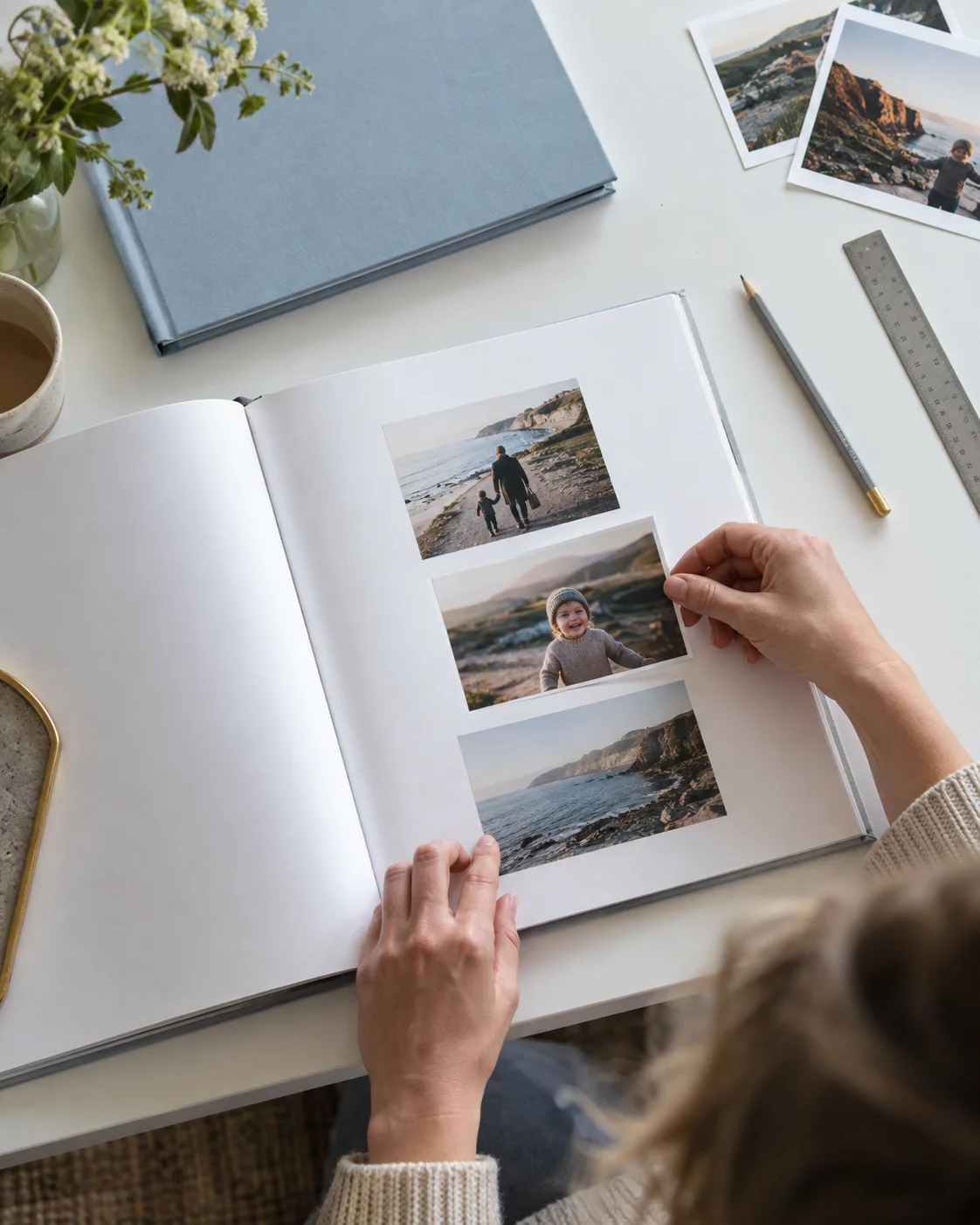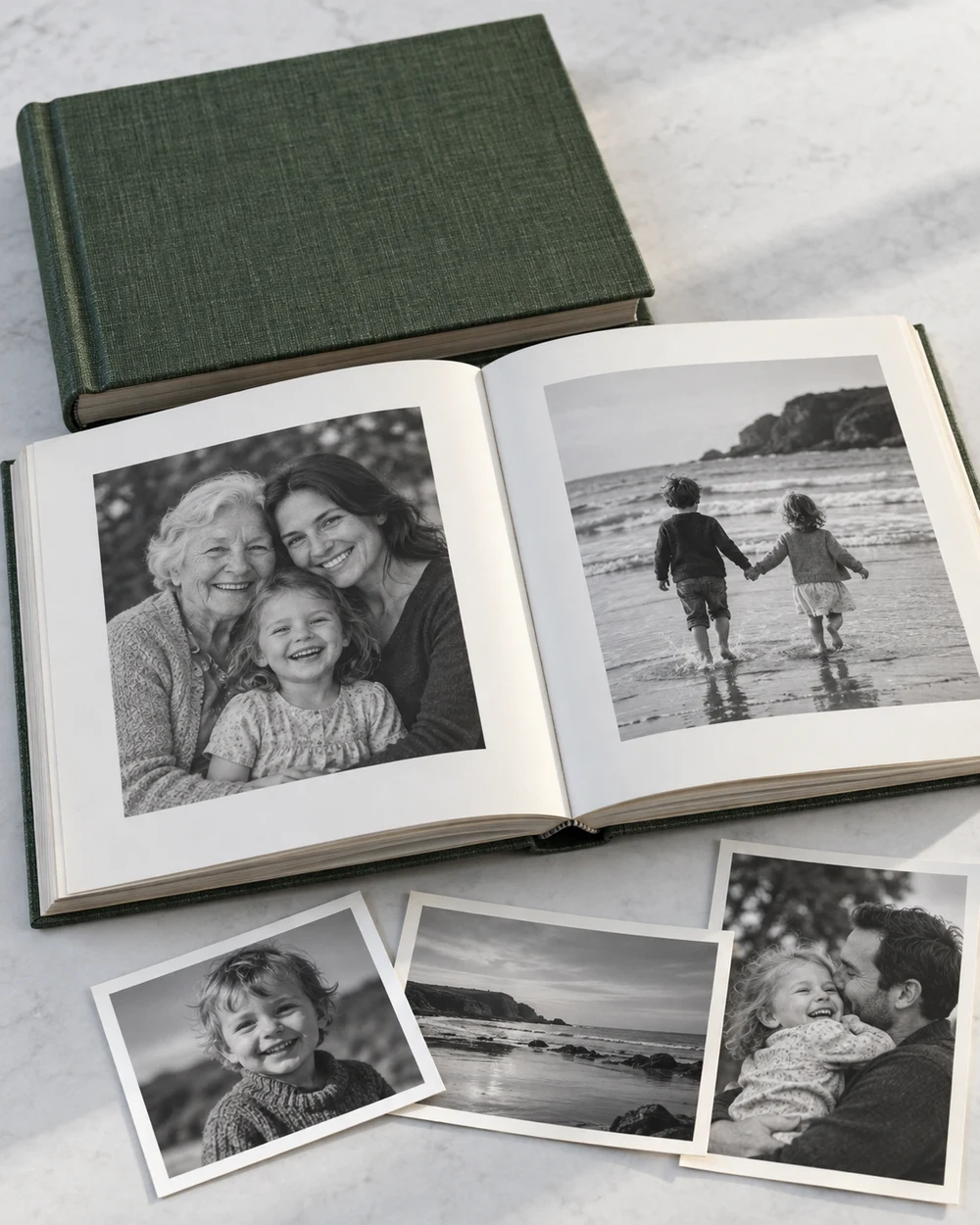
Start with one shoebox of photographs
A calm sorting session that protects the originals and keeps the stories attached.
Set a small boundary
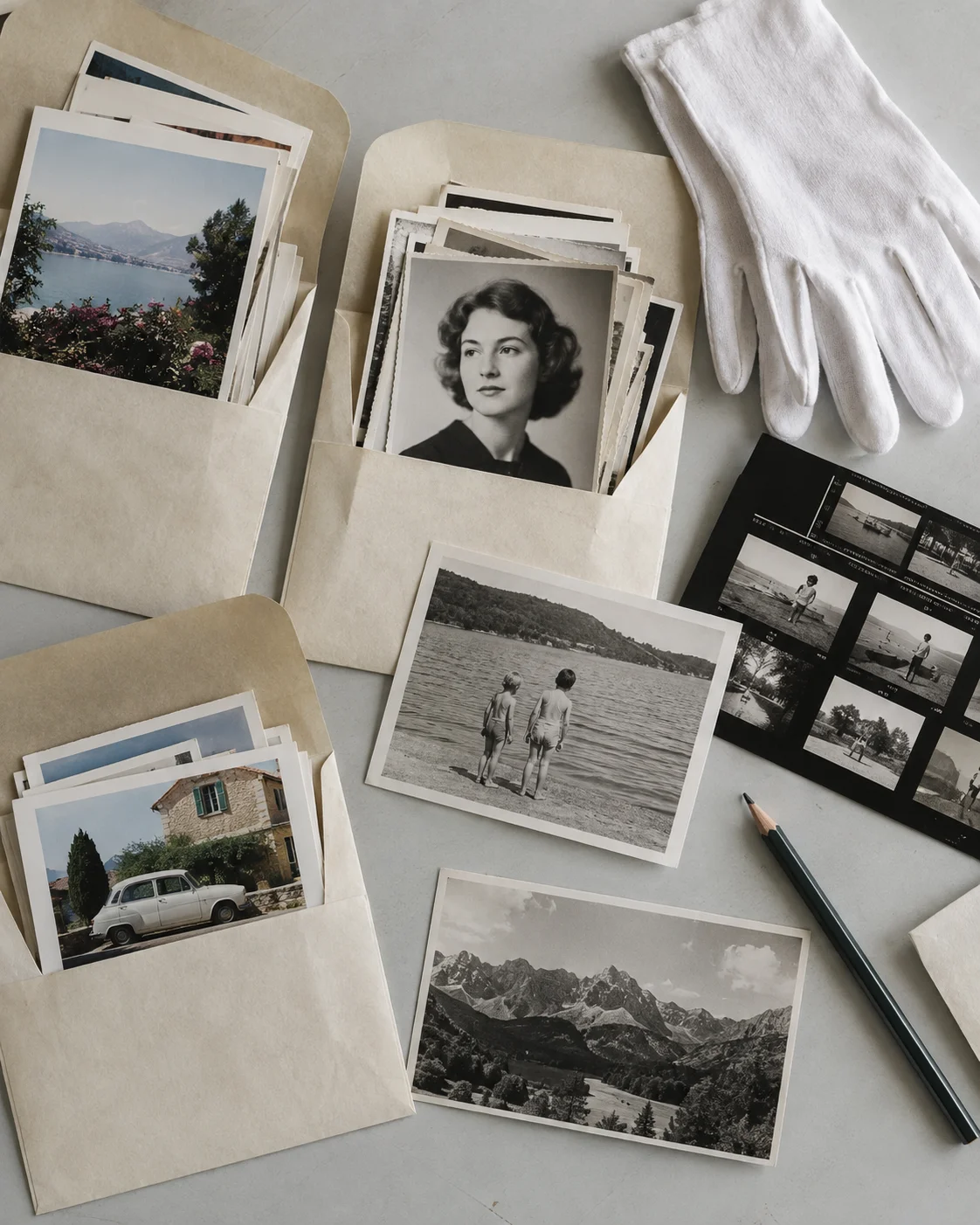
Clear a dry table and work with a manageable handful of pictures. Keep food, drink and direct sunlight away. Before rearranging anything, photograph how the collection was stored, including envelopes and handwritten labels. Those groupings may contain useful context. Make broad temporary groups such as known people, known places and questions to ask. Do not throw away unidentified photographs just because nobody in the room recognises the faces. Their meaning may become clear after another relative looks at them.
Separate identification from storage
Use a working list to record names, dates and places, noting who provided the information. Avoid writing across the image surface, using sticky notes on a print or forcing a photograph out of an old album. If an item is stuck, flaking or damaged, leave it in place and seek advice from a photograph conservator. Use clean, dry hands and handle sound prints by their edges. Choose enclosures specifically intended for photographic storage rather than assuming any plastic sleeve is suitable.
Finish with a simple finding aid
Give each group a clear label and keep your notes with a copy of the collection inventory. Store photographs in a stable, dry interior location away from radiators, damp walls and bright light. Avoid garages, lofts and basements where conditions can vary widely. A digital scan makes sharing easier, but it does not replace the original object. End the session by putting every item somewhere safe; completing one box carefully is a better result than leaving the whole collection spread across the floor.
Keep original files and objects safe, and ask permission before sharing another person's story.
Illustrative imagery. Our editorial approach.