A family photo book, one small chapter at a time
A manageable way to turn a camera roll into something you can hold.
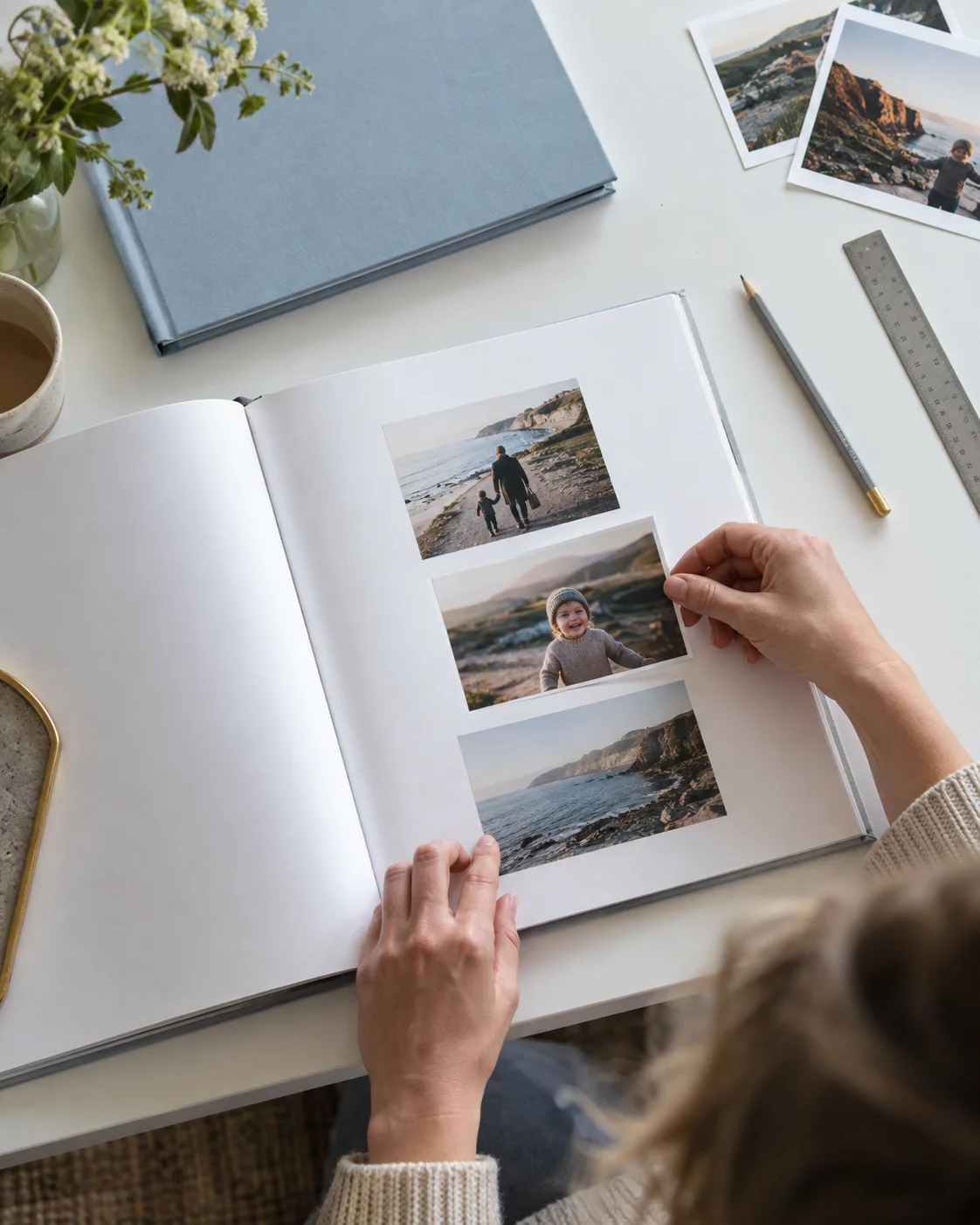
Choose a chapter, not your whole life
Start with one holiday, one season or one person. A small brief makes decisions easier: a weekend at the coast might need twenty pictures, while an annual album may need several rounds of editing. Write down the beginning and end of your story before opening a layout tool. Keep the original files in their existing folders and put copies of your shortlisted images in a separate working folder. That way, rejecting a picture from the book never means losing the photograph.
Let the pictures breathe
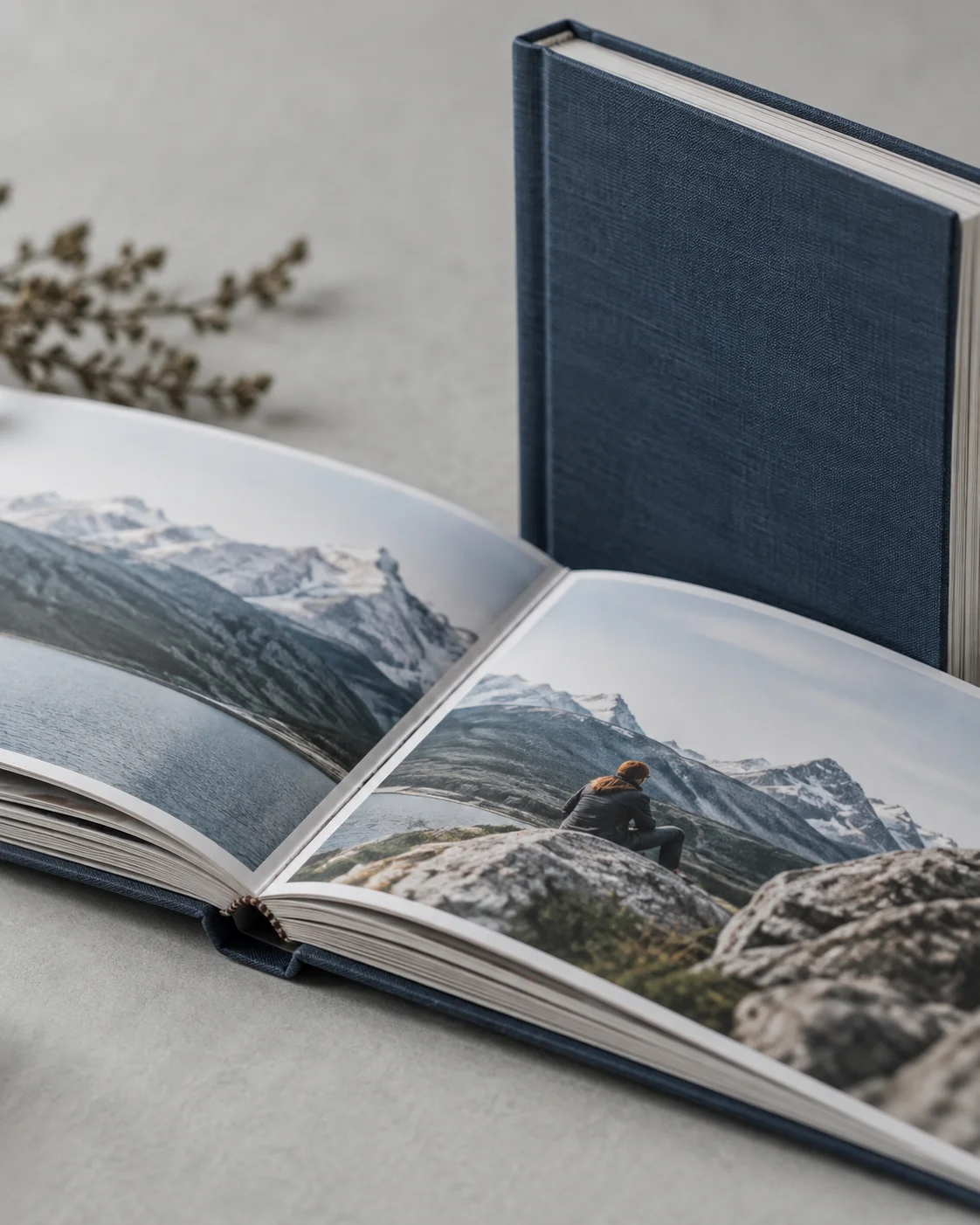
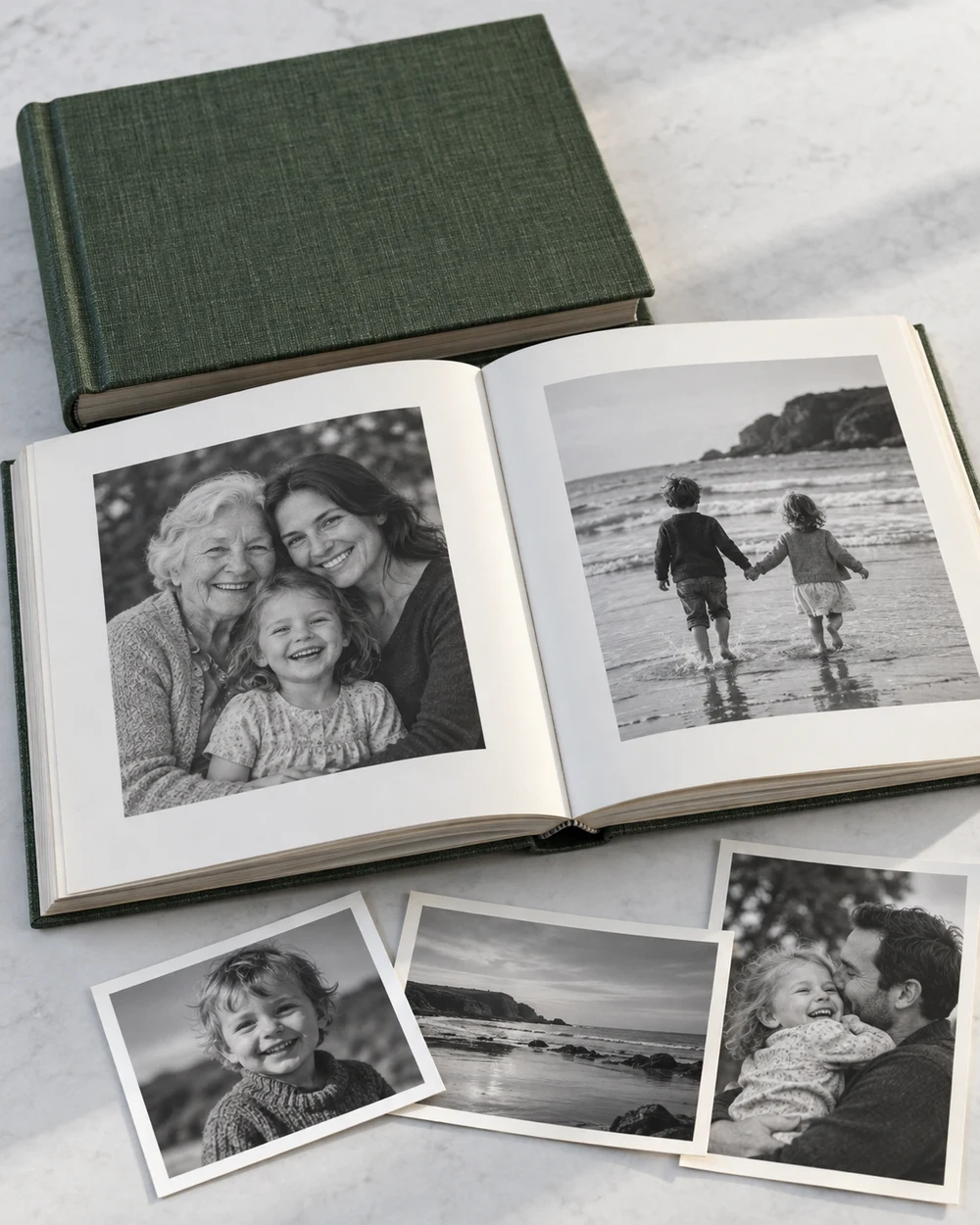
Choose a handful of photographs that deserve a page to themselves. Between these, group related details: the walk to the beach, sandy shoes by the door, the meal everyone remembers. A mix of people, places and small objects tells a richer story than twenty similar portraits. Check the printer's resolution warning at the size you intend to use. Avoid stretching a small screenshot across a full spread. Leave faces and important details away from the binding and trim edges.
Add the details you might forget
Names, approximate dates and locations help a future reader understand what they are looking at. Ask somebody who was there to check uncertain captions rather than guessing. Read a proof at normal page size and look for clipped text, duplicate photos and awkward page breaks. If the service offers a proof or a small first order, consider checking that before ordering copies for everyone. Save the final project and a record of the supplier separately from the printed book.
Keep original files and objects safe, and ask permission before sharing another person's story.
Illustrative imagery. Our editorial approach.