The stories begin with a better question
Gentle conversation prompts that go beyond dates and family trees.
Begin somewhere familiar
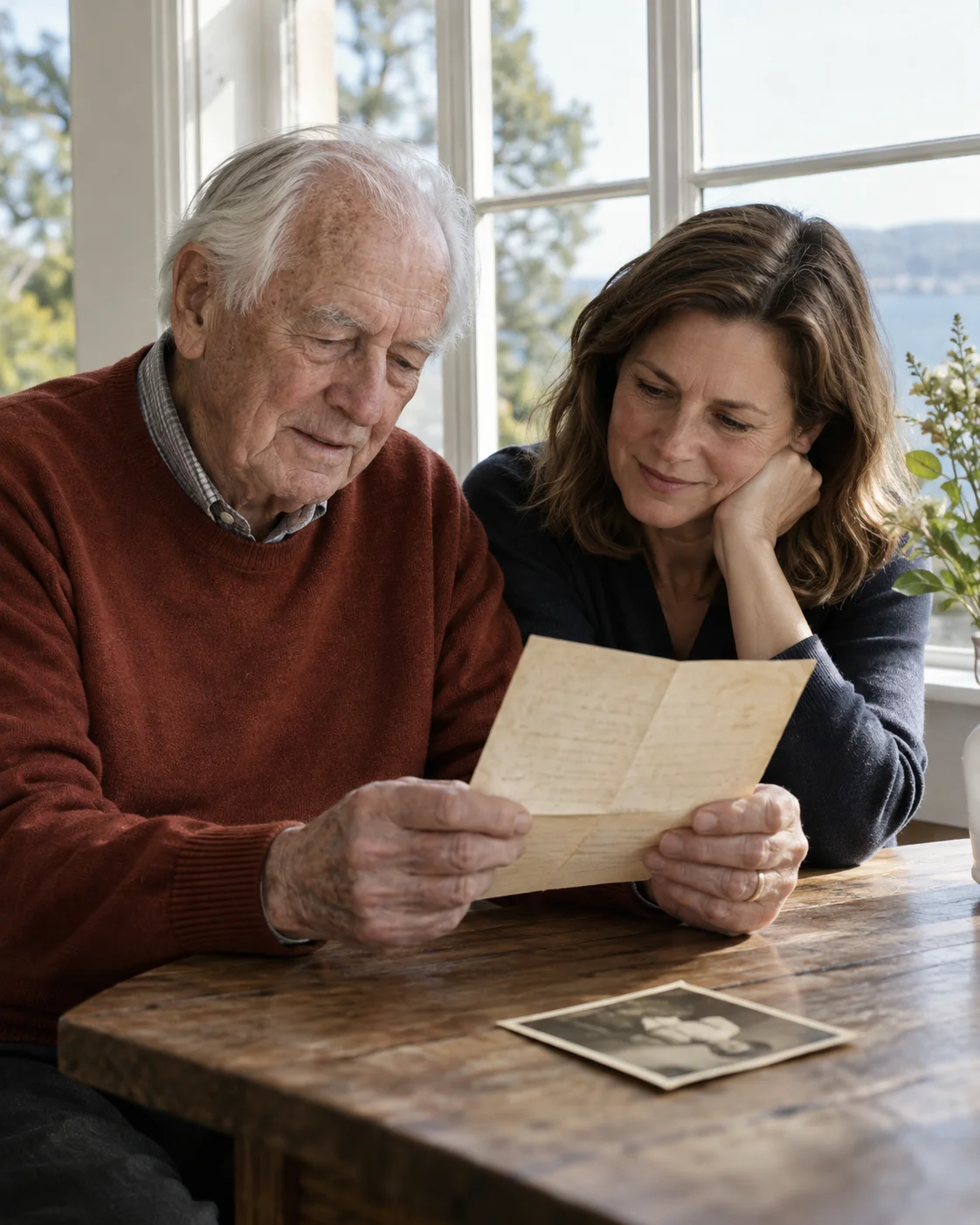
Ask about the room where somebody ate breakfast, a journey to school or the music played at home. Small, concrete prompts often feel easier than asking for a complete life story. A photograph can help, but let the person decide where the conversation goes. Ask what they remember, not what you hope they will confirm. Leave room for uncertainty and for a story to be told differently on another day. The aim is to understand a person, not to complete an interrogation.
Listen for everyday detail
Follow the details they choose: who taught them to cook, what a first pay packet bought, or which neighbour always visited. Ask a short follow-up and then pause. Silence can give someone space to think. Avoid interrupting a memory to correct a date; make a private note and return to it gently later if it matters. Some topics are painful or private. Make it clear that questions can be skipped and that stopping is always an option.
Agree what happens next
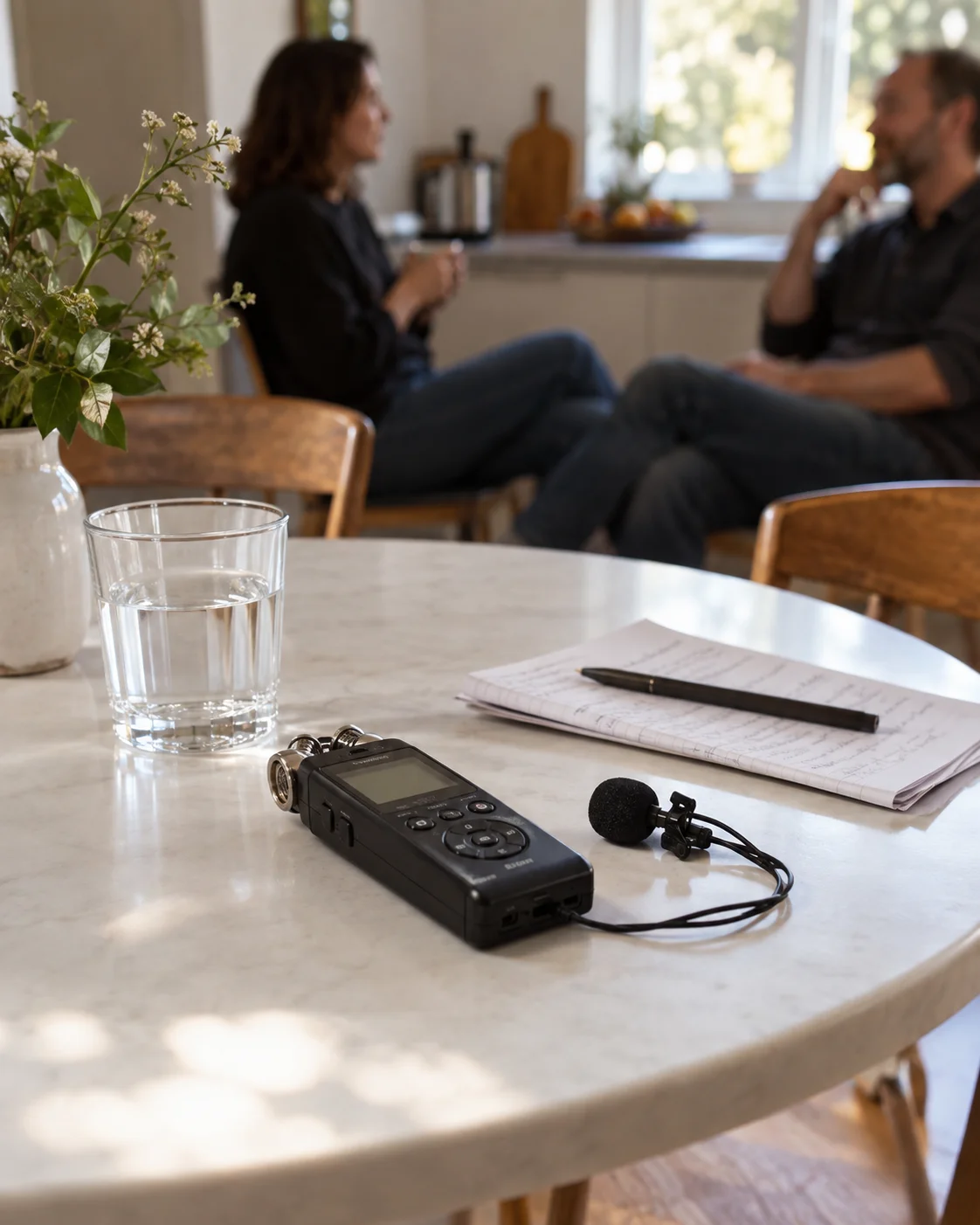
Get permission before recording and discuss who may hear or read the conversation. Keep an unedited copy securely, then create a shorter listening copy if useful. Offer the person a chance to review any written account before sharing it with relatives or publishing it. Label uncertain details as uncertain and distinguish personal memory from a verified historical fact. A short conversation preserved with care can be more valuable than a long recording that nobody knows how to find.
Keep original files and objects safe, and ask permission before sharing another person's story.
Illustrative imagery. Our editorial approach.