Keep the handwriting with the family recipe
Preserve the flour marks, the corrections and the person behind the dish.
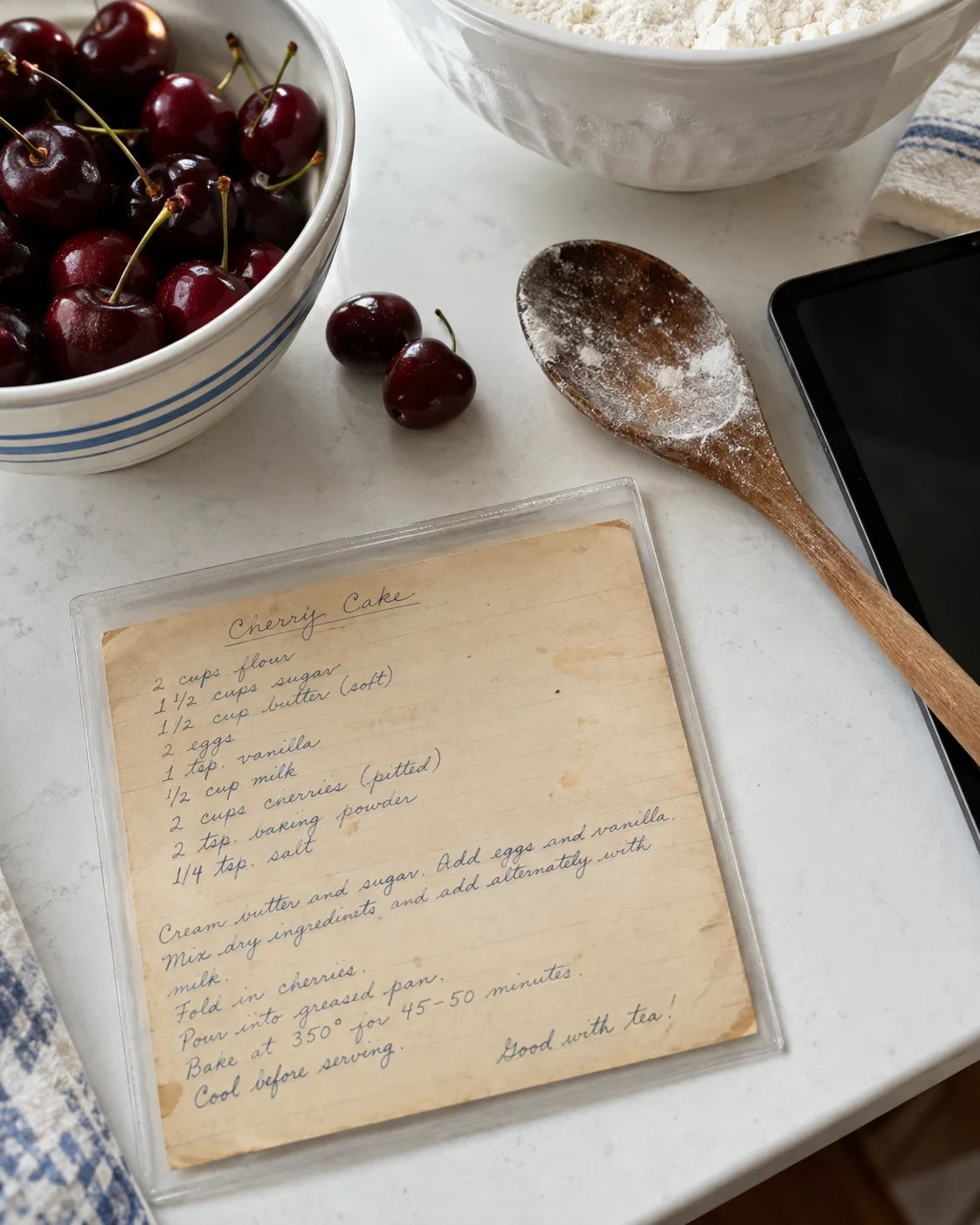
Capture the original first
Photograph or scan the recipe before handling it repeatedly. Include the reverse of a card and any notes written in the margins. Use even light and keep the whole sheet in frame. Keep an unedited image before making a brighter reading copy. If the paper is brittle, stained or stuck to something else, avoid flattening or cleaning it yourself. A legible transcription is useful, but the original handwriting often holds the emotional connection that a neatly typed page cannot replace.
Record the unwritten instructions
Ask the cook what a pinch, a cup or a moderate oven meant in their kitchen. Write the answer alongside the original wording instead of silently replacing it. Note who supplied a conversion and whether it has actually been tested. A family recipe is a historical record, not automatic food-safety guidance. Use current reliable advice for safe preparation and storage, especially when old notes mention preserving, raw ingredients or keeping food at room temperature.
Share a working copy
Create a version that can be used in the kitchen while the original stays protected. Include the cook's name, an approximate date and a short memory of when the dish was served. Ask permission before distributing a relative's personal notes or publishing a recipe online. Keep the image and transcription together in your digital folders and back them up. A small collection of well-labelled favourites is easier to pass on than a large folder of photographs with no explanation.
Keep original files and objects safe, and ask permission before sharing another person's story.
Illustrative imagery. Our editorial approach.