How To Choose A Protective Slipcase For A Photo Book
A practical step-by-step guide to how to choose a protective slipcase for a photo book, including preparation, instructions, common issues, tips, and next steps.
How To Choose A Protective Slipcase For A Photo Book
Choosing a protective slipcase for a photo book is a simple process of matching materials and fit to how you plan to store and carry the book. This guide helps you select a case that shields the cover, spine, and page edges from dust, light, and handling without causing scratches or pressure marks.
Fast Answer
- Measure your book's height, width, and thickness, then look for a slipcase listed as slightly larger than those dimensions.
- Choose a case with a soft interior lining and a rigid outer layer that resists bending and moisture.
- Test the fit before storing long term: the book should slide in and out with gentle effort and no wobble.
Before You Start
- Gather a flexible tape measure or a ruler, a pencil, and a sheet of paper to record your book's exact dimensions.
- Clear a flat, clean surface where you can set the book and the case without scratching either one.
- If the book has a dust jacket, decide whether you will store it on or off and measure accordingly.
- Read the product description or label for the case to confirm the material, interior lining, and stated dimensions.
Step-by-Step Instructions
Measure your photo book carefully
Use a ruler or tape measure to record the book's height, width, and thickness. Measure at the tallest point, the widest point, and the thickest part of the spine, because photo books can vary slightly from cover to cover. Write these numbers on paper and include a small buffer, such as a few millimeters, so the case will not press on the book. Do this before shopping, since guessing often leads to a case that is too tight or too loose. A precise measurement is the foundation of a good fit, and it prevents returns or damage later. If the book has a slipcover or jacket, measure with it on if you plan to store it that way. Check the numbers twice and keep them with you when comparing case options.
Compare interior and exterior materials
Look for a slipcase with a soft interior lining, such as felt, brushed fabric, or acid-free paper, that will not scratch glossy covers or leave marks. The exterior should be rigid enough to resist bending, but not so hard that it chips or cracks during normal handling. Avoid cases with rough seams or exposed adhesive inside, because these can rub against the book over time. If the case is made of plastic, check that it is smooth and not sticky, as some plastics can cling to covers. For long-term storage, choose materials that block dust and resist moisture without trapping dampness. Read the product details to confirm the lining and outer material, and if the information is missing, ask the seller before buying. A good material match protects the book without adding risk.
Check the opening style and closure
Slipcases open in different ways, such as a top-loading sleeve, a side-loading pocket, or a clamshell with a hinged lid. Top-loading cases are easy to use and keep the book upright, while side-loading cases can be better for books that will be stacked flat. A closure, such as a flap, ribbon, or magnetic tab, can keep dust out, but make sure it does not press on the book. Open the case fully and imagine sliding your book in and out. If the opening is too narrow or the closure is stiff, you may struggle each time and risk bending pages. Choose a style that matches how often you will access the book and where you will store it. This check matters because a difficult opening can lead to accidental damage every time you use the case.
Test the fit with a gentle slide
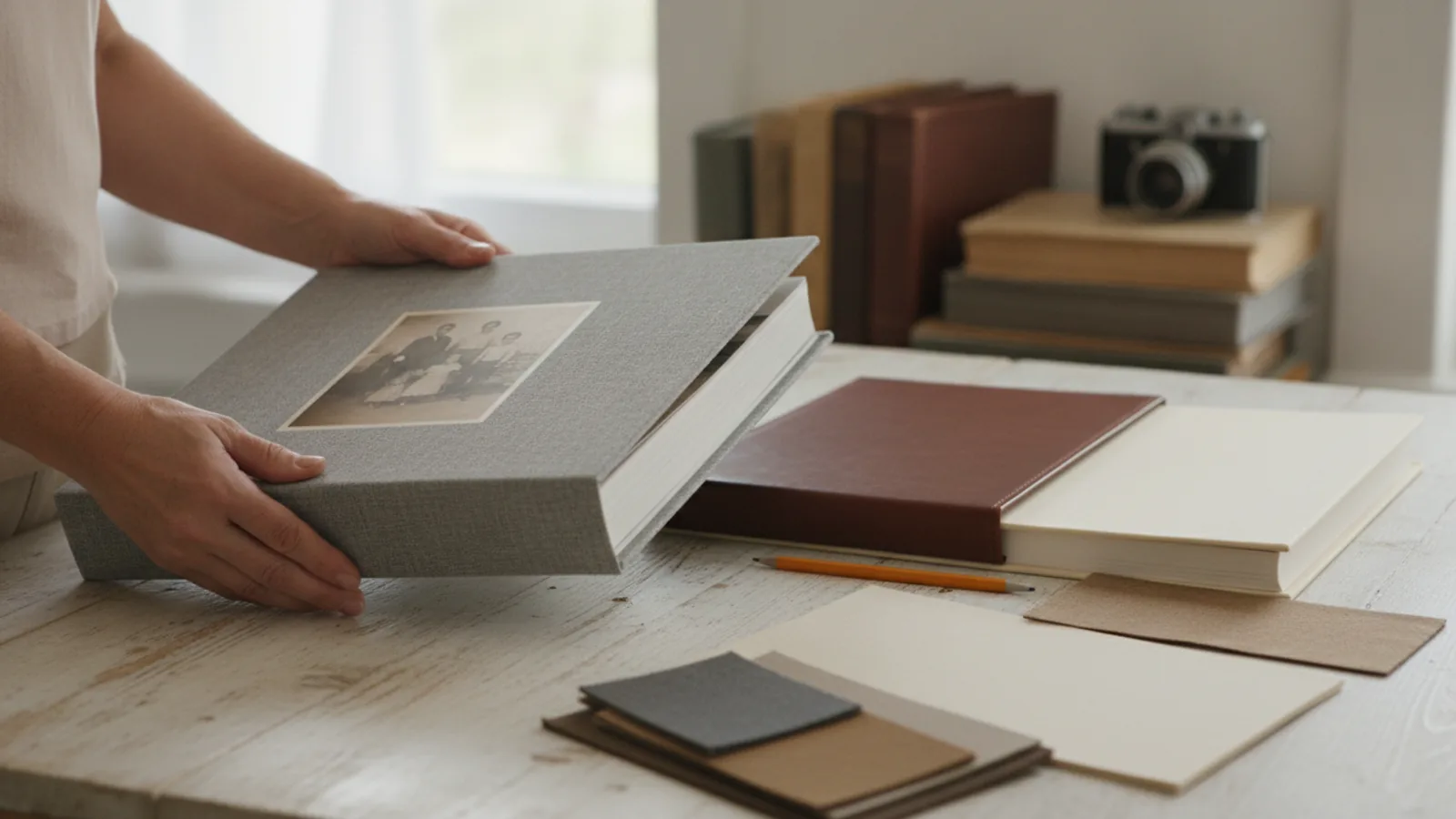
Once you have a candidate case, place your book on a clean surface and slide it into the case slowly. It should go in with light pressure and sit without rattling. If you must push hard, the case is too small; if the book slides out on its own when you tilt the case, it is too loose. A proper fit holds the book snugly but does not squeeze the spine or cover. After inserting, close the case and turn it over gently to see if the book shifts. Then remove the book and check for new marks, dust, or pressure lines. This test is essential because it reveals problems that measurements alone cannot show, such as a lining that grabs the cover or a case that is slightly warped.
Evaluate protection for light, dust, and handling
Think about where the book will live. A shelf near a window exposes it to light that can fade covers, so choose an opaque or dark-tinted case that blocks light. A dusty room calls for a case with a tight closure or a fully enclosed design. If you will carry the book often, look for a case with reinforced corners and a water-resistant exterior. For long-term storage, avoid clear plastic that can trap moisture and cause mildew in humid conditions. Instead, pick a breathable material or add a desiccant packet away from the book if humidity is a concern. Check the product description for light-blocking and moisture-resistance claims, but treat them as guidance and inspect the case yourself. Matching protection to your environment keeps the book safe where it actually rests.
Confirm long-term storage and handling habits
Before you commit, review how you will store and handle the book over months or years. If you plan to stack books, choose a case with a flat, rigid top and bottom that will not crush under weight. If you will stand the book upright, pick a case with a sturdy spine panel so the book does not lean. For frequent handling, consider a case with a smooth lining and an easy-open closure so you are less likely to drop the book. Also check that the case can be cleaned without damaging the book, such as by wiping the exterior with a dry cloth. Finally, write down the case size and material so you can order the same type again if needed. This step matters because storage habits change over time, and a case that fits today's shelf may not suit tomorrow's move or display.
Quick Reference
| Situation | Action | Why it helps |
|---|---|---|
| Your book has a glossy cover that shows fingerprints and scratches easily. | Choose a slipcase with a soft, non-abrasive interior lining such as felt or brushed fabric, and avoid cases with rough seams or exposed adhesive. | A smooth lining prevents small scratches and rub marks that can dull the cover's finish over time and reduce its visual appeal. |
| You need to store the book on an open shelf in a room with dust and indirect light. | Pick an opaque or dark-tinted case with a tight closure or fully enclosed design, and place it away from windows and vents. | An enclosed, light-blocking case reduces dust buildup and slows fading, which helps preserve cover colors and page edges. |
| The book will travel in a bag or be handled often by different people. | Select a case with reinforced corners, a water-resistant exterior, and a secure but easy-to-open closure, then test the fit before each trip. | Reinforced corners and a secure closure protect against bumps and spills, while an easy opening reduces the chance of dropping the book during handling. |
Common Issues
- The slipcase feels too tight and the book does not slide in smoothly.: Do not force it. Return or exchange the case for a larger size, or look for a style with a slightly deeper interior. If you cannot exchange it, store the book in a different case, because forcing it can warp the spine and scratch the cover.
- The book slides out of the case when you tilt it.: The case is too loose. Add a thin, acid-free foam insert or a piece of felt along the spine side to reduce movement, or choose a smaller size. A snug but gentle fit prevents the book from shifting and protects the corners during handling.
- You notice small scratches or rub marks on the cover after using the case.: Inspect the interior lining for rough spots, dust, or grit, and clean it with a soft, dry cloth. If the lining is still abrasive, replace the case with one that has a softer interior. Keeping the inside clean and smooth stops repeat damage.
Advanced Tips
- Use a folded piece of acid-free paper as a custom shim along the spine side to fine-tune the fit without adding bulk or pressure.
- Rotate the book in its case every few months if it is stored upright, so no single edge bears constant pressure from the shelf or case.
- Keep a small silica gel packet in the storage area, not inside the case against the book, to reduce humidity without risking direct contact.
Final Checklist
- Record your book's height, width, and thickness, including any dust jacket you plan to keep on.
- Confirm the case has a soft interior lining and a rigid, dust-resistant exterior that suits your storage location.
- Slide the book in and out gently to verify a snug fit with no wobble and no need to force it.
- Store the cased book away from direct sun, heat, and damp surfaces, and check it for marks every few months.
FAQ
Should I measure my photo book with or without its dust jacket?
Measure the book in the same condition you plan to store it. If you will keep the dust jacket on, include its thickness in your height and width, and add a little buffer. If you remove the jacket, measure the bare cover. Storing a jacketed book in a case sized for the bare cover can cause tightness and rub marks, so match the measurement to your actual storage choice.
Can I use a clear plastic sleeve instead of a slipcase?
A clear plastic sleeve can protect against dust, but it may not block light and can trap moisture in humid conditions. For long-term storage, a rigid slipcase with a soft lining and opaque exterior usually offers better protection against light, bumps, and dust. If you prefer a plastic sleeve, check that it is smooth, not sticky, and store it in a dry place away from direct sun.
How often should I check the fit and condition of the slipcase?
Check the fit and the case's condition every few months, or before and after any move or trip. Look for dust, rough seams, or new scratches on the book. If the case becomes loose, worn, or damp, replace it promptly. Regular checks let you catch small problems before they cause lasting damage to the cover, spine, or page edges.